Dog Translator & Dog Training
- 4.3
- Rating
- 5.00M
- Installs
- Free
- Price
 Analysis by App-foxy
I approached Dog Translator & Dog Training with the right amount of curiosity and caution. The idea is simple: use playful sound-based interactions to create a more entertaining way to engage with a dog, while also offering training-oriented activities and cat sounds for households with more than one kind of pet. After spending time with it, I see the app less as a literal translator and more as a conversation starter between people and animals. That distinction matters, because it sets a much more realistic expectation from the beginning.
Developed by LordEagle JSC, this free entertainment app is aimed at anyone who enjoys experimenting with pet sounds, casual dog games, and light training sessions. It is available for users on Android 7.0 or later, carries an Everyone age rating, and has reached over five million installs. Its average rating is 4.3 from around 2.8 thousand ratings, which suggests that the basic idea connects with a broad audience, although popularity alone does not turn playful sound effects into a dependable communication method.
Turning a sound experiment into a useful pet activity
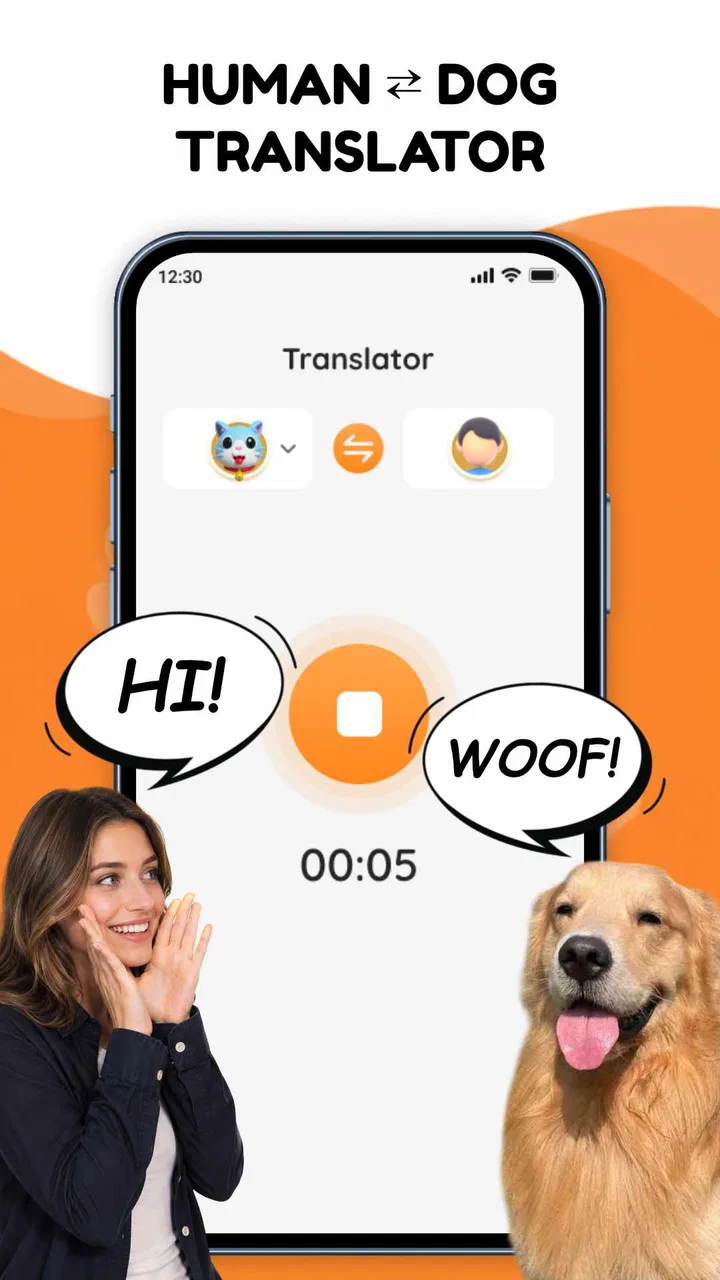
The central capability is the dog translator concept. You choose or trigger a sound, play it near your pet, and watch the reaction. That can be amusing, especially with a curious puppy or a dog that responds strongly to unfamiliar noises. The important practical effect is not that the app reveals exact thoughts. Instead, it gives you a structured reason to observe your dog’s body language, attention, and mood.
You May Also Like

 Google Keep - Notes and lists
Google Keep’s Quiet Growth Shows the Appeal of Simpler Notes
As mobile work gets busier, Google Keep keeps winning a simple contest: capture a thought quickly, find it later, and get on with the day.

 Blood Strike: 2.5 Anniversary
Blood Strike’s Loadouts Turn Every Drop Into a Tactical Gamble
A close look at Blood Strike’s custom loadouts: how fast access to signature weapons reshapes its battle royale rhythm, rewards preparation, and narrows the gap between fights.

 Pandora - Music & Podcasts
Pandora’s Music Is Easy to Start, but Harder to Recover
Pandora’s strength is its low-effort path from a seed to a station. Its weak spot is how much confidence it asks you to place in connection, setup, and quiet recovery.

 8 Ball Pool
 Is Built on Rivalries, Rematches, and Routine
A close look at the rivalries, rematches, shared routines, and unanswered safety questions that turn a quick pool match into a persistent mobile community.

 Samsung Music
’s Quiet Strength Is Playing What You Already Own
Its reach comes less from spectacle than from dependable access to a personal library. That simplicity is both the app’s strongest retention engine and its ceiling.

 AccuWeather: Weather Radar
AccuWeather Review: A Quick, Clear Forecast for Everyday Decisions
For everyday plans, the best forecast is the one you can understand quickly. AccuWeather makes rain timing, radar, and local conditions easy to act on, with a few trade-offs.
More From Our News Desk



I found that this makes the app most valuable when it encourages the owner to slow down. Rather than repeatedly pressing sounds for a reaction, I would use one interaction, pause, and look at the dog’s ears, posture, tail, and distance from the phone. Does the dog approach, ignore the sound, become alert, or move away? Those observations are more meaningful than the label attached to any individual sound.
This is where the app separates itself from a standard soundboard. A basic soundboard is usually built for quick jokes: tap a button, hear a bark or meow, and move on. Here, the translator theme gives the activity a purpose, while the training angle creates a natural follow-up. You can use the playful moment to regain your dog’s attention, then shift toward a simple behavior such as looking at you, sitting, or waiting.
The translator is best treated as an attention tool, not a scientific interpreter. That is not a weakness unique to this app; it is the basic limitation of translating animal communication into human language. Dogs communicate through context, movement, scent, vocalization, and learned routines. A phone speaker cannot capture all of that. Once I accepted that, the feature became more enjoyable and less misleading.
What the sound feature changes in everyday use
The most useful change is that it gives inexperienced owners a small framework for interaction. Someone who is unsure how to play with a new dog may find it easier to begin with a sound, observe the response, and reward calm attention with a treat, praise, or a favorite toy. The app does not replace knowledge of dog behavior, but it can make the first step feel less awkward.
It can also help families share responsibility for a pet. Children may be drawn to the novelty of the translator, while an adult can turn that excitement into a short lesson about waiting, approaching gently, and noticing when the dog has had enough. I would still supervise younger children, because a dog that is startled or overexcited may not react in the way a child expects.
The inclusion of cat sounds broadens the appeal for mixed-pet homes, but it also creates a reason to be selective. A sound that interests one animal may stress another. I would never use the app to repeatedly provoke a cat or dog for entertainment. The value comes from controlled, brief interactions where the pet can walk away freely.
How I would use it during a normal training session
I would begin with the phone at a low volume and keep the first interaction short. The goal is not to fill the room with repeated barking or meowing. It is to see whether the dog notices the sound and then turns back toward me. If that happens, I would immediately reward the attention through a calm voice, a treat, or a game the dog already enjoys.
That workflow turns the app into a prompt rather than the entire lesson. The sound attracts attention; the owner supplies consistency. If the dog becomes agitated, hides, barks continuously, or starts searching anxiously for the source, I would stop. Continuing in that situation would teach the wrong lesson and could make the phone associated with stress.
A useful technique is to separate novelty from obedience. On the first attempt, simply observe the reaction. On a later attempt, ask for one familiar behavior after the dog looks toward you. This avoids confusing the animal with a new sound, a new command, and a new reward pattern all at once. It also makes it easier to tell whether the app is helping attention or merely creating excitement.
I would keep sessions brief and finish while the dog is still comfortable. The app is designed for casual entertainment, so it is better suited to small moments throughout the day than to a long, formal training block. For serious behavior work, a trainer, a structured course, or veterinary guidance will be more appropriate.
The strongest scenario: a bored dog and a busy household
The best everyday scenario is a household with a young or easily bored dog that needs short bursts of engagement. Imagine coming home after work and finding that your dog is restless but not ready for a long walk. I would use one sound interaction to capture attention, follow it with a simple known command, and then switch to a toy or a few minutes of calm play. The app becomes a bridge from passive screen time to direct interaction.
That sequence is more useful than handing the phone to a child and letting the sounds run continuously. It keeps the human involved and gives the dog a predictable ending. The phone starts the activity, but eye contact, movement, praise, and play complete it. In my experience, that is the difference between a novelty app that gets abandoned quickly and one that occasionally earns a place in a daily routine.
It may also suit someone adopting a dog for the first time. New owners often want to understand every sound their pet makes, but they can become overly focused on finding a one-to-one translation. This app offers a gentler entry point: listen, observe, and learn the individual animal’s normal behavior. A dog’s response to a sound can vary because of age, temperament, previous experiences, and the situation in the room.
For a mixed-pet family, the cat sounds can add a second layer of supervised play. I would keep animals separated if either one tends to chase, guard resources, or become tense around unfamiliar noises. The presence of a cat option does not make every sound safe for every pet. The owner still has to manage distance, volume, and the animal’s ability to retreat.
Where the app feels less convincing
The biggest trade-off is the gap between the word “translator” and what a phone app can realistically deliver. Anyone expecting a reliable sentence such as “I am hungry” or “I want to go outside” will probably be disappointed. The app works better as an interpretive play tool, because the meaningful information comes from your dog’s reaction rather than from a definitive message on the screen.
Repeated sounds can also lose their effect quickly. A dog may investigate the first time and ignore the same noise later. That is normal, but it limits the long-term novelty. If the app becomes a constant source of stimulation, the dog may learn to wait for the phone instead of engaging with the owner. I would rotate between sound-based play, ordinary toys, walks, scent games, and quiet rest.
Another point of friction is volume and environment. A sound that seems harmless in a quiet room may be startling in a small space or around a sleeping pet. Public places are especially poor settings for experimentation, since other animals and people may react unpredictably. I would test it at home, keep the phone close enough to control, and stop at the first sign of discomfort.
The training component should also be understood as support for simple practice, not a complete behavior program. If a dog is showing aggression, severe fear, separation distress, destructive behavior, or sudden changes in vocalization, this is not the tool I would choose as the main solution. A qualified trainer or veterinarian can evaluate the underlying issue in a way a sound-based entertainment app cannot.
Because it is free, the app is easy to try without a financial commitment. That makes it more attractive for casual users, but free access does not remove the need for judgment. I would still avoid treating every button as something that must be tested repeatedly. The best experience comes from using only the interaction that fits the dog’s current mood.
Who gets the most from the experience
Dog owners who want a playful prompt for short, supervised interactions are the clearest audience. It is especially suitable for people who enjoy observing their pet and are willing to participate rather than expecting the app to do all the work. Families can use it to create a small shared activity, and new owners may appreciate the gentle structure it gives to early bonding.
It is also a reasonable choice for someone who wants dog games and sound experiments in one entertainment app instead of collecting several narrowly focused tools. The cat sounds make it more relevant to homes with multiple pets, provided the owner treats them as optional stimuli rather than guaranteed enrichment for every animal.
I would skip it if your main goal is precise animal communication, advanced obedience training, or professional behavior correction. A dedicated training resource is a better option when you need a progressive plan, reliable timing guidance, or help with a difficult problem. I would also skip it for a pet that is easily frightened by electronic sounds, unless you already know how to introduce new stimuli gently.
The app’s current version is 1.2.8, and its broad Everyone rating makes it approachable for general household use. Still, age suitability does not remove the need for adult supervision when children are playing around animals. A child may see a funny reaction as a reason to repeat a sound, while the dog may see it as unwanted pressure.
My practical recommendation before you install
Think of this as a small activity kit for moments when you want to engage your dog, not as a replacement for walks, affection, training knowledge, or professional advice. Start with one sound, watch the response, and make your own interaction the reward. If the dog stays relaxed and interested, you can repeat the activity occasionally. If the dog avoids the phone or becomes tense, there is no benefit in pushing further.
I like the app most when it turns curiosity into better observation. It gives owners a reason to notice individual behavior instead of assuming that every bark has the same meaning. That is a modest goal, but a useful one. The entertainment layer makes it approachable, while the training angle gives the interaction more purpose than a random collection of animal noises.
My final view is favorable, with clear limits. Dog Translator & Dog Training is worth trying if you want a free, lighthearted way to start short pet activities and you understand that the “translation” is playful rather than literal. Its strongest result is not a perfect message from your dog; it is a few minutes of focused attention between you and your pet. Used gently and in moderation, that is enough to make it a pleasant addition to an everyday pet routine.
FAQs for Dog Translator & Dog Training
01How does the Dog Translator & Dog Training app work?
The Dog Translator & Dog Training app uses sound recognition technology to analyze and interpret your dog's barks and vocalizations. It translates these sounds into human language to help you understand your pet's needs. Additionally, the app offers a range of training modules to improve communication and obedience.
02Is the app suitable for all dog breeds and ages?
Yes, the Dog Translator & Dog Training app is designed to be versatile and effective for dogs of all breeds and ages. It features customizable settings to adapt to different vocal tones and training requirements, ensuring a tailored experience for your specific pet.
03What training methods are included in the app?
The app includes positive reinforcement techniques, such as clicker training and reward-based exercises, to encourage good behavior and obedience. It offers step-by-step tutorials and interactive modules that are easy to follow, making training sessions enjoyable and productive for both you and your dog.
04Can the app be used offline?
While some features of the Dog Translator & Dog Training app require an internet connection, such as updates and community forums, the core functionalities like sound translation and basic training modules can be accessed offline. This allows for uninterrupted use even when you're not connected to the internet.
05Are there any in-app purchases or subscriptions?
The Dog Translator & Dog Training app offers a range of free features, but it also includes premium content available through in-app purchases. Subscriptions may unlock advanced training modules, personalized coaching, and additional languages for translation, providing a comprehensive toolset for dedicated pet owners.
Pros
- User-friendly interface for all ages.
- Includes fun and interactive training games.
- Wide variety of dog sounds available.
- Detailed training tips and guides included.
- Customizable settings for personalized use.
Cons
- Requires internet connection for full features.
- Limited free content; in-app purchases needed.
- Ads can be intrusive during app use.
- Not all translations are accurate or reliable.
- Battery consumption is relatively high.

Dog Translator & Dog Training
Gallery